

The Solar Process
Your One-Stop Solar Installation Company in Tucson
Rising energy costs and the environmental impact of traditional electricity have resulted in a growing number of people looking for renewable options for powering their homes. The sky contains the most effective and cleanest source of energy – the sun! At The Solar Store, our team of experts works hard to provide our customers with a hassle-free solar process in Southern Arizona. Contact us today for more information about the solar process.
Cochise County & Pima County are Perfect for Solar
The abundant year-round sunshine makes Southern Arizona the perfect place for powering your home or business with solar power. Using solar to power your home makes sense considering the amount of sunlight in this area of the country. The economic and environmental benefits of this technology offer many advantages to you and the earth.
When you are ready to make the switch to solar, there is only one company to call. The Solar Store has more than two decades in business, and our team has more than 60 years of combined industry experience. Our dedicated installers are leaders in solar module installation, offering affordable options and expert guidance through the solar process in Southern Arizona.
Steps in the Solar Process
The first step in the solar process in Southern Arizona is a free consultation with an expert from The Solar Store. During the consultation, we discuss your energy needs and provide you with examples of the many benefits of solar power. We can explain the options that we offer, make recommendations for your home, and answer your questions. Based on the information gathered in the consultation, we will create a design and proposal for your system.

3 Simple Steps to Get Started
Decades of Installation Experience
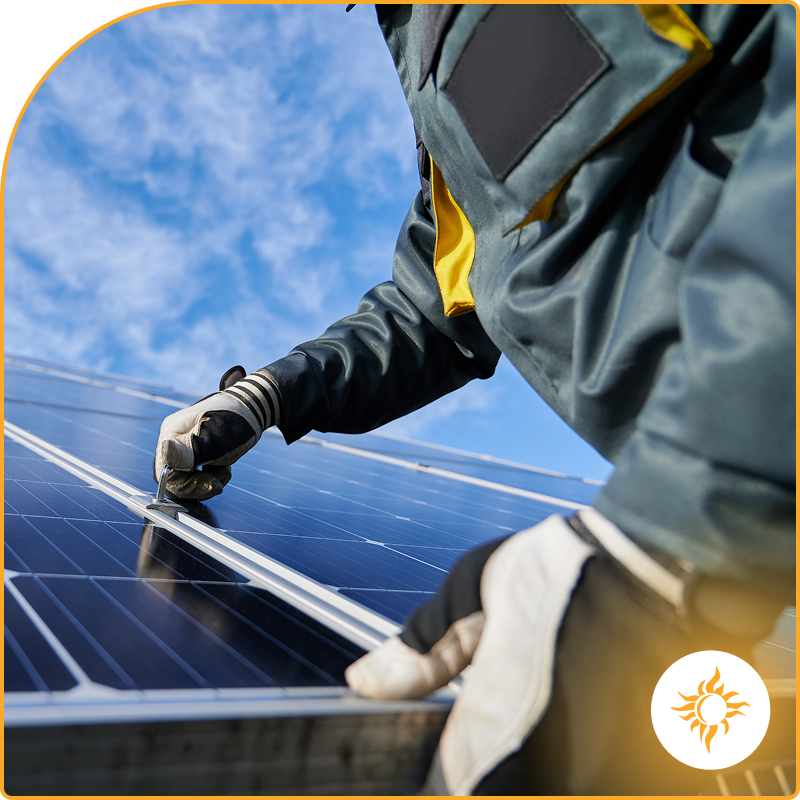
The next step in the solar process in Southern Arizona is the installation of your system. We have licensed and experienced technicians to install your solar modules, so you can start saving money right away. We have more than 60 years of combined experience and extensive training to ensure the precise installation of your solar system. Our systems are monitored weekly to make sure everything is working and determine if anything needs to be updated.
In addition to installation, we handle service for solar systems, including those we did not install. Most companies won’t service another company’s system. This has led to “orphaned” systems that were installed by a company that is no longer in business. At The Solar Store, we do provide service and happily adopt systems that were installed by other companies.
Please contact us today at (520) 341-2286 to arrange a consultation to discuss how switching to solar can benefit you.
Hear From Our Customers
-
For people "starting from zero" this was a huge help to us.
“Katharine - Thanks to you and the team for getting our solar set up promptly and professionally. I don't have enough good things to say about Kevin, the teams who conducted the installations, and your own involvement. All our friends who got solar done (or tried) have horror stories about scams and unprofessional behavior; it put us off from trying this for a while. We were at first relieved and then very happy. Everyone we interacted with was friendly, professional and knowledgeable about the process, technology and government requirements. For people "starting from zero" this was a huge help to us.”- JDC

-
Technically speaking in the solar electric realm, a module is a complete, environmentally-protected unit. A panel is a collection of modules that are mechanically fastened together. For solar thermal, the individual component is called a collector.
-
Silicon and rare metals such as gallium, indium, and selenium. The frames are made of extruded aluminum. The glazing is tempered low iron glass.
-
Estimates are free for grid-tie solar electric and solar thermal systems. There is a nominal charge for estimates for landscape lighting, radiant floor heating, and off-grid solar systems. Typically 50% of the fee is applied toward the final purchase.
-
Typical systems weigh 3 ½ to 4 pounds per square foot. Most structures built since 1930 can easily support the weight.
-
It stands for photovoltaic.